1990 was a great year. I got my 386 PC, with a whopping 40MB hard drive and, at the same time, Photoshop and Corel PaintShop Pro were released. I was chuffed. To be honest, Corel PaintShop Pro was my fave over Photoshop. I found it more transparent to use – more intuitive. Nevertheless, both were fascinating to me and I spent hours at home scanning and editing photos. I’d been fascinated by computer graphics ever since getting my Commodore 64 in 1984, and this was a real step up. I was also working for the University of Sydney at the time and using Ventura Pro for desktop publishing. I considered myself the king of digital creation. Unfortunately, I have nothing left from that period.
My life was also taken up with computer games. Again, it was the graphics that hypnotised me. In 1993, I bought a shareware game called Doom, and it blew me away with its pseudo 3D. It came with a game map editor and I wasted days, weeks, months creating my own maps and playing them. Then came Quake and again I was entranced. So I decided that I had to learn computer graphics. I just had to!
It just so happened that in 1996 I was undertaking my second degree . Whereas my first had been mostly in History and English, this one was in Computer Science at the University of Technology, Sydney. So I enrolled in a computer graphics subject. One of the things that interested me in that subject was the theory of fractals, which was lucky because we were given assignments to write our own fractal generators. Below are two screen captures from the program I wrote.
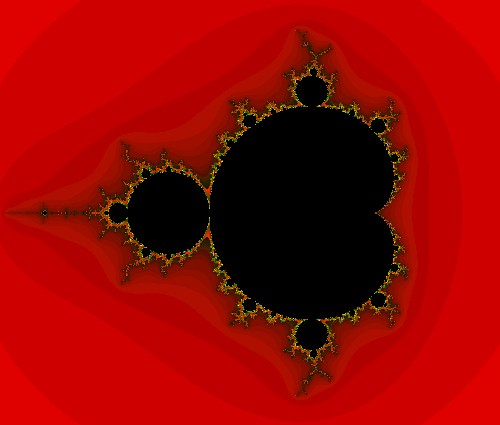
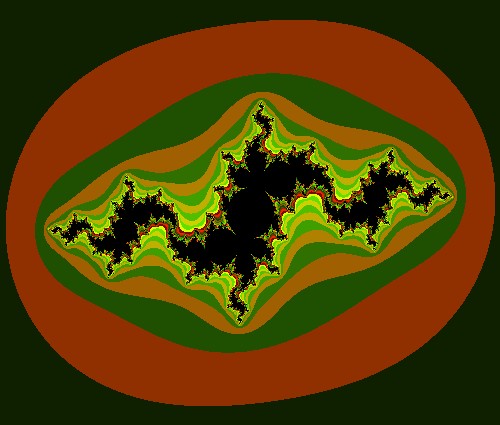
However, the highlight of that subject was a solo project. I chose to develop a fractal landscape generator in Delphi, which was quite new at the time
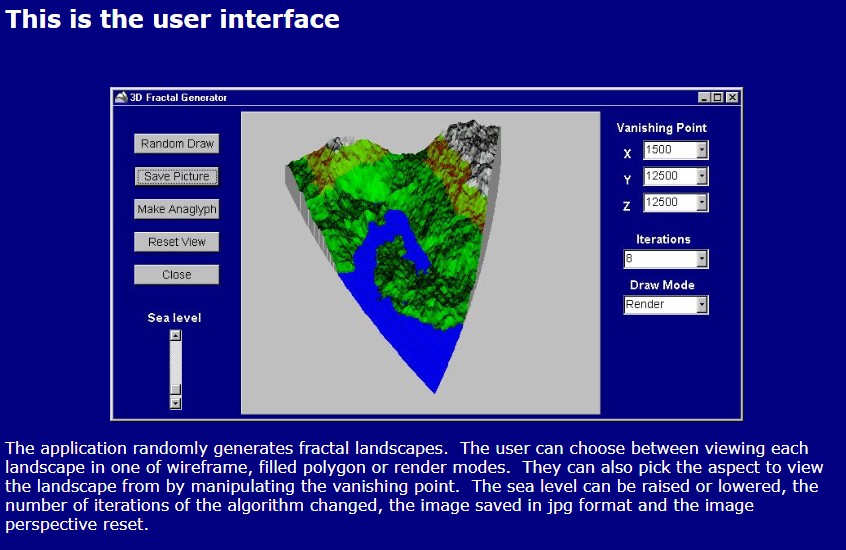
In all honesty, I was pretty stoked to have written this. But it wasn’t enough. That same year, 1996, a program called Bryce hit the shelves. Bryce was a spectacular program at the time. There were other similar applications such as Vue d’Espit, but I liked Bryce. Bryce, just like Blender these days, gave basic shapes and the ability to group them and add colours. So I bought some books on it and started to see what I could do. In all honesty, the beginnings were pretty basic.
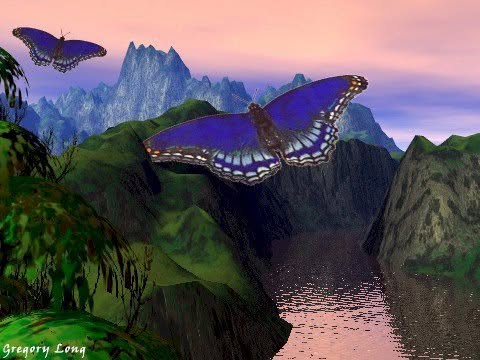
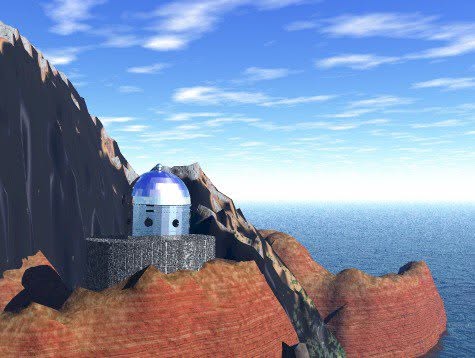
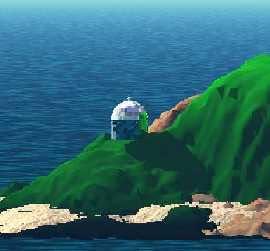
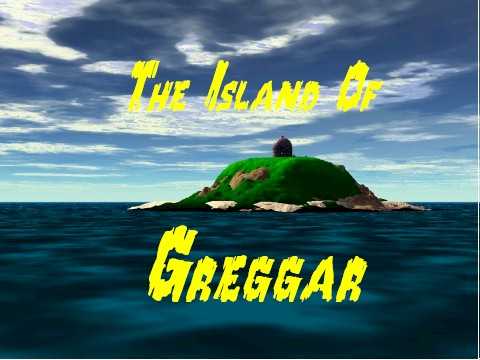
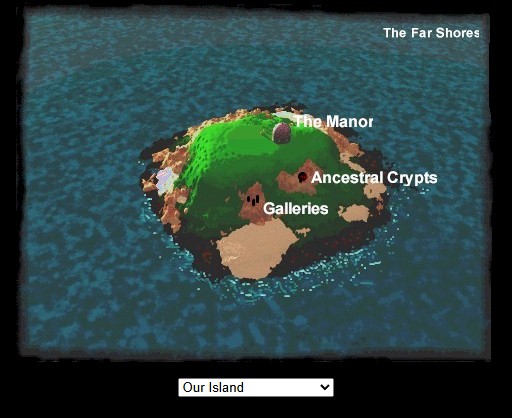
At the time, Geocities was a free hosting site that was very popular. So I built my first webpage there called the Island of Greggar. I thought I was pretty clever as I used JavaScript and HTML to build a wonderfully interactive site – at least I thought it was. All the island images I created using Bryce, inspired by a game called Myst. The cursor did multicolour sparkles. It was completely over the top – and incredibly fun for me.
But, naturally, I wanted to create an animation. Bryce 2 for Windows (1997) was good. But did not do animations. But Bryce 4 (1999) gave me that capability. Straight away I planned what I wanted to create – a spaceship zooming through space (bet that surprises all the people that know me – not at all). On reflection, I wish I had my original Bryce file. It’s probably sitting somewhere among my ten million backups, but it’s not readily at hand. The thing was, building the ship was the easy part. I squashed a cylinder. Squashed and distorted a ball around it. Made both chrome. Shoved a smaller chrome ball in the opening of the cylinder and voila… an engine. I then duplicated that four times. I flattened and stretched another couple of balls and suddenly had the disk body of the ship. A few connectors and greebles, grouped the lot, and a spaceship appeared. No, that was easy.
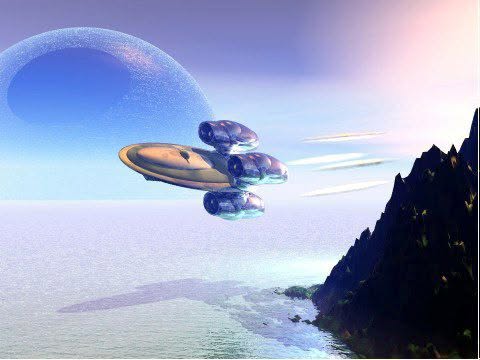
The difficult thing I discovered was the animation and the camera placement. This took me ages to master, but I did it. Below is the result. And this was my first decade of digital graphics.